
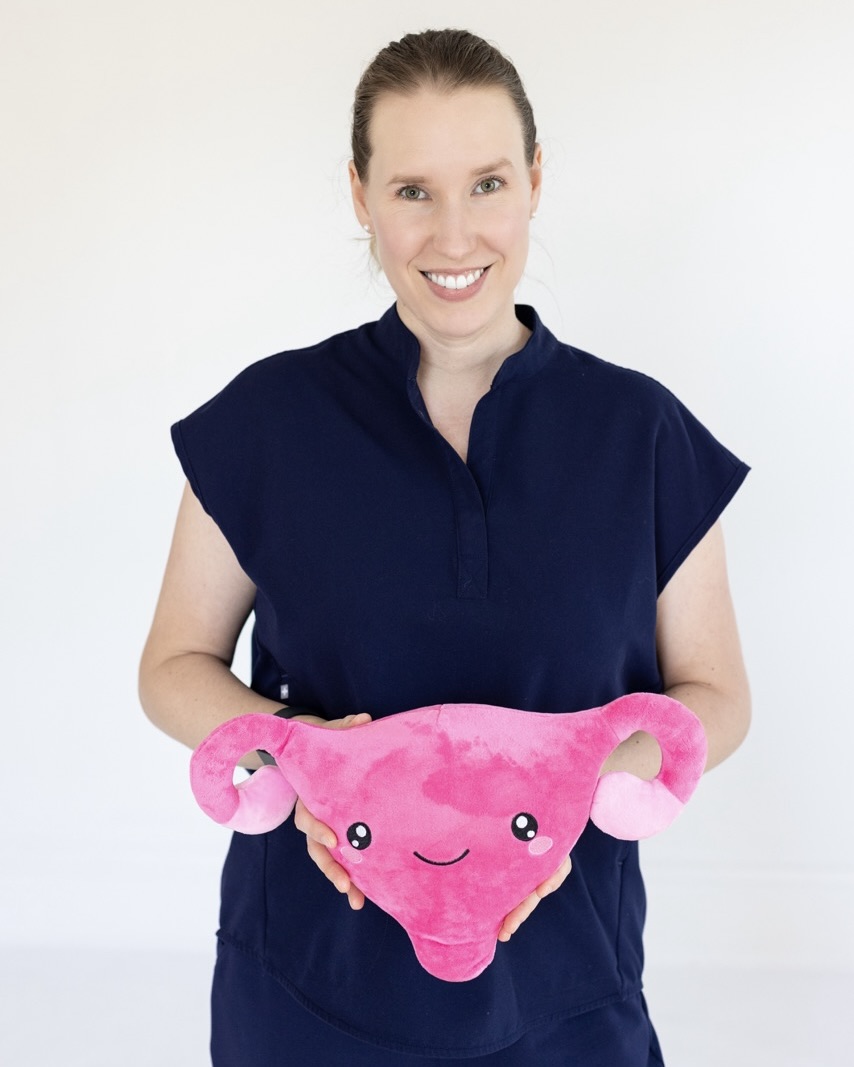
Welcome to March, Endometriosis Awareness Month!
Endometriosis is an extremely painful condition that affects 1 in 10 women in the U.S. Despite affecting 200 million women worldwide, it is often misunderstood and misdiagnosed. In fact, most women experience a 10-year delay in receiving a diagnosis, and are often dismissed and told that their excruciating pain is “just part of being female.”
Although there is no cure for endometriosis, there are treatments that can help by both removing the painful tissue and managing the symptoms. This is where physical therapy comes in. Read on to learn about this condition and how PT can help.
About Endometriosis
Endometriosis (commonly called “endo”) is a painful condition caused by abnormalities in the hormone and immune systems. These abnormalities cause uterus-like tissue to grow outside of the uterus, and can lead to bleeding, adhesions, pain, and organ dysfunction. Even though this is commonly thought of as a pelvic pain condition, endo can affect the entire body. It can cause infertility, bowel and bladder problems, painful intercourse, and severe psychological distress. In rare cases, the out-of-place tissues—called endometriomas—can spread beyond the pelvis into other organs, including the brain1.
Our understanding of endo is improving, but there is still a lot that we don’t know. For instance, we do not yet know exactly why endo occurs, and we do not know how to cure it. However, it is possible to remove the endometriomas through minimally invasive laparoscopic excision surgery. This is done by a highly specialized surgeon. To learn more about how to find the right surgeon, I encourage you to visit this helpful page on the Endometriosis Foundation of America website.
The Role of Pelvic Health Physical Therapy
Pelvic health physical therapy plays a vital role in managing endometriosis symptoms, and it is also important in recovering from endometriosis excision surgery.
Prior to surgery, a pelvic PT can help patients to manage their pelvic pain and improve their quality of life through exercise, mindfulness, and changes to their movement patterns. A recent systematic review of endometriosis research showed that physical activity and exercise can improve “pain, control and powerlessness, and emotional well-being” in women with endometriosis2. The types of physical activity in this review were highly variable, including everything from yoga, to progressive muscle relaxation, to aerobics, to stretching. This shows that many types of physical activity can have a positive effect. As a PT, I often use a combination of yoga, strengthening, and cardiovascular exercise to help a client improve their symptoms.
Pelvic PT can also help to soothe the nervous system and release tension in the body. When a person is in pain often, and for a long time, they tend to guard themselves, clenching their core, their jaw, their shoulders, and—you guessed it—their pelvic floor. This chronic clenching is actually counterproductive because it creates tension and stress in the body, increasing pain and reinforcing the pain cycle. As a pelvic health PT, I help patients with endometriosis learn how to relieve that tension. Unclenching the muscles of the pelvic floor, hips, abdomen, and upper body decreases the stress throughout the pelvis, reducing pain.
Finally, a pelvic PT can help you change how you move so that your movement patterns relieve pain, rather than reinforce it. This may involve simple changes to how you stand, how you lift objects up from the floor, or how you sit at your desk. Because we do these movements all day, every day, they have a cumulative effect on our body. But if you intentionally change these movements, even just for part of the day, it will have the reverse effect. When it comes to managing endometriosis, it is important to practice pain-free movement patterns to reduce pain with daily activities.
If you do undergo laproscopic excision surgery, a pelvic health physical therapist is an important provider to include in your recovery plan. A pelvic PT will help you encourage optimal healing for your incisions and help you return to physical activity safely. Even though the surgery is minimally invasive, it has a big impact on your body! It is important to take a gradual approach to recovery to prevent fatigue, prolonged post-operative pain, and poor wound healing. This requires an individualized program that returns you carefully to your favorite forms of physical activity, whether it is walking, gardening, running, weight lifting, rock climbing, or anything in between.
Shining the Light on Endo
While we have a long way to go in terms of understanding and treating endometriosis, there are numerous organizations that are supporting endometriosis research, building awareness, and changing how we manage this disease. Most importantly, these organizations, along with a network of healthcare providers and advocates, are bringing endo out of the shadows so that people living with it no longer feel alone, silenced, and afraid. I encourage you to visit the websites of the Endometriosis Foundation of America and the Endometriosis Association to learn more about how you can help shine the light on endo this month and help raise support for people living with endo worldwide.
- https://www.endofound.org/endometriosis ↩︎
- Xie M, Qing X, Huang H, Zhang L, Tu Q, Guo H, Zhang J. The effectiveness and safety of physical activity and exercise on women with endometriosis: A systematic review and meta-analysis. PLoS One. 2025 Feb 13;20(2):e0317820. doi: 10.1371/journal.pone.0317820. PMID: 39946383; PMCID: PMC11824993.
↩︎
 But first, Pelvic Health.