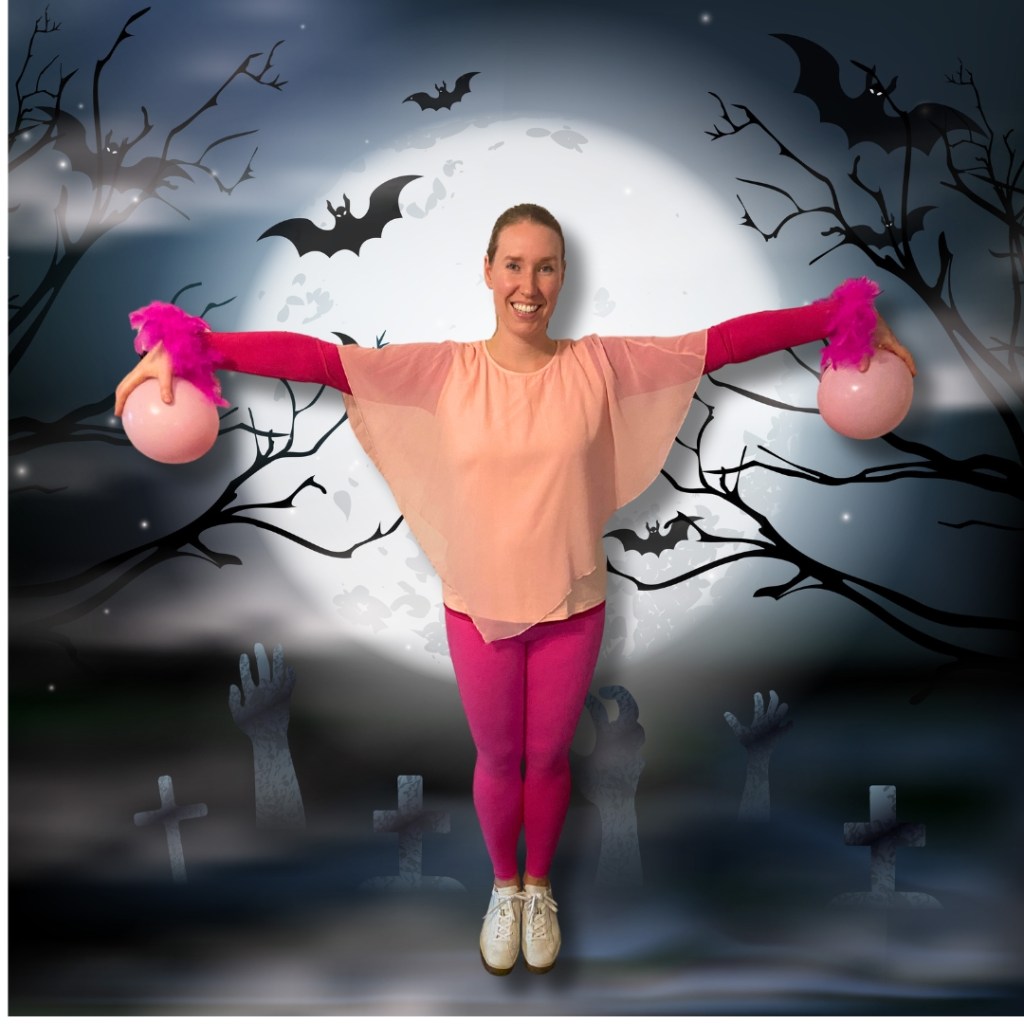
Halloween (my favorite holiday) has finally arrived! This year, I decided to be my favorite organ—the uterus! I know what you’re thinking: “But Savannah, the uterus isn’t very scary!” And you would be right, the uterus itself isn’t scary at all. It’s remarkable. It’s incredible. It will blow your mind. But being a person with a uterus? Now that can be pretty scary, depending on where you live, the color of your skin, and your ability to access healthcare. Let’s delve in to some spooky facts about being a person with a uterus. Don’t be scared! We will learn some fun facts about why the uterus is so amazing, too!
Spooky Fact #1
Being a person with a uterus means that you are also a person who has the potential to become pregnant. In case your mama didn’t tell you, being a pregnant person is dangerous, especially in the United States. According to a report by the CDC, the US maternal mortality rate in 2021 was 32.9 deaths per 100,000 live births. That’s 1,205 mothers lost either during delivery or within 42 days postpartum. Sadly, this number is increasing, not decreasing. The United States’ maternal mortality rate for 2021 was 40% higher than the previous year.1
The data is even more tragic for people of color. Being a black person with a uterus—in terms of maternal mortality in the U.S.—is more than twice as dangerous as being a white person with a uterus. In 2021, the rate among black Americans was 69.9 maternal deaths per 100,000 live births.2

The United States is failing people with uteruses. According to NPR, the U.S. mortality rate is 10 times the rate of other high income countries, such as Japan and Australia. Combined with our nation’s poor maternity and paternity leave standards, the increasing cost of childcare, and our dysfunctional healthcare system, it is no surprise that fewer and fewer people are choosing to have children.3
Spooky Fact #2
After the U.S. Supreme Court overturned Roe vs. Wade, the nation became exceedingly hazardous for people with uteruses seeking medical care during pregnancy, regardless of whether they were seeking an abortion or having a miscarriage. In fact, living in a state with restrictive abortion laws threatens the quality of reproductive healthcare in general, abortion or not.4
According to a study by University of Buffalo, “people experiencing a miscarriage in states with restrictive abortion policies may be less likely to receive optimal care than those in states with supportive abortion policies.” The study found that in states with restrictive abortion laws, physicians managing early miscarriage were less likely than those in supportive states (40.8% vs. 67.5%) to offer mifepristone, a drug used to help empty the uterus in the event of miscarriage.
For people seeking to terminate a pregnancy, the landscape is treacherous. Abortion is completely banned in 13 states, meaning 58% of people with uteruses age 13-44 live somewhere that is hostile to abortion care. Such bans have dire implications for maternal healthcare, too. The Guttmacher Institute states in their June 2023 report that, “states that have banned or restricted abortion have worse maternal health outcomes than those where abortion is legal, with fewer maternity care providers and higher maternal and infant mortality rates.” These rates are, of course, higher amongst people of color.5
I told you it was spooky.
Having a uterus comes with risks, including many that I haven’t covered here. From cervical cancer, to fibroids, to endometriosis, being a person with a uterus can be very scary. Luckily, there are simple actions you can take today to help!
- Vote! If you, like 69% of Americans, support safe, legal access to abortion care, get involved in your local and state elections and use your vote and your voice to create change.6 As of June of 2023, 700 abortion bills had been introduced in legislatures nationwide. About half of these would expand access. Your vote is crucial! And don’t forget to bring your friends!
- Support your local reproductive healthcare centers. Clinics such as Planned Parenthood don’t simply provide abortion care. They also provide numerous services for people with and without uteruses, including pelvic exams, STD testing, cancer screening, HIV care, and primary care. Donating to these clinics helps ensure that these essential healthcare services are available to everyone who needs them.
- Educate yourself about pelvic health. You’re reading this blog, so you must already be doing this! Way to go! Keep learning about all things pelvic health so that you can stay informed and help inform others. There is a lot of bad information about pelvic health out there. Learn the facts so you can stop harmful falsehoods from hurting others.
And now, without further ado, here are some fun facts about the uterus!
Fun Facts about the Uterus
- The uterus can expand from the size of a lemon to the size of a watermelon during pregnancy! And then, by about 6 weeks after childbirth, it returns to its original size!
- The uterus is covered in a supportive connective tissue called the broad ligament. The broad ligament is draped over the uterus, kind of like a sheet. So basically, your uterus is always dressed up in a ghost costume!
- The uterus is muscular tissue that has the ability to contract. In fact, it is the uterus that pushes out a baby during childbirth!
- The uterus is the only organ that has the ability to create another organ—the placenta! The placenta is temporary, and it is generated by the uterus during pregnancy to support the fetus.
Pretty amazing, right? No wonder it is my favorite organ!
Happy Halloween, ghouls and gals!
Rhea Physical Therapy is a mobile pelvic health clinic serving women and children in the St. Louis, MO area and beyond. Rhea PT is owned and operated by Dr. Savannah Carlson, PT, DPT, RYT. Dr. Carlson is a pelvic health specialist who is dedicated to helping her clients overcome pelvic floor dysfunction so they can reach their full potential at home, work, and play. She earned her doctor of physical therapy degree at Washington University in St. Louis. The information provided on But First, Pelvic Health is for educational purposes only and should not be used as personalized medical advice. The opinions in the blog post belong solely to the author.
- DOI: https://dx.doi.org/10.15620/cdc:124678 ↩︎
- https://www.npr.org/sections/health-shots/2023/03/16/1163786037/maternal-deaths-in-the-u-s-spiked-in-2021-cdc-reports#:~:text=The%20U.S.%20rate%20for%202021,deaths%20per%20100%2C000%20in%202020. ↩︎
- https://www.brookings.edu/articles/us-births-are-down-again-after-the-covid-baby-bust-and-rebound/ ↩︎
- https://www.buffalo.edu/news/releases/2023/02/06.html ↩︎
- https://www.guttmacher.org/2023/06/state-abortion-policy-landscape-one-year-post-roe ↩︎
- https://news.gallup.com/poll/506759/broader-support-abortion-rights-continues-post-dobbs.aspx ↩︎
 But first, Pelvic Health.