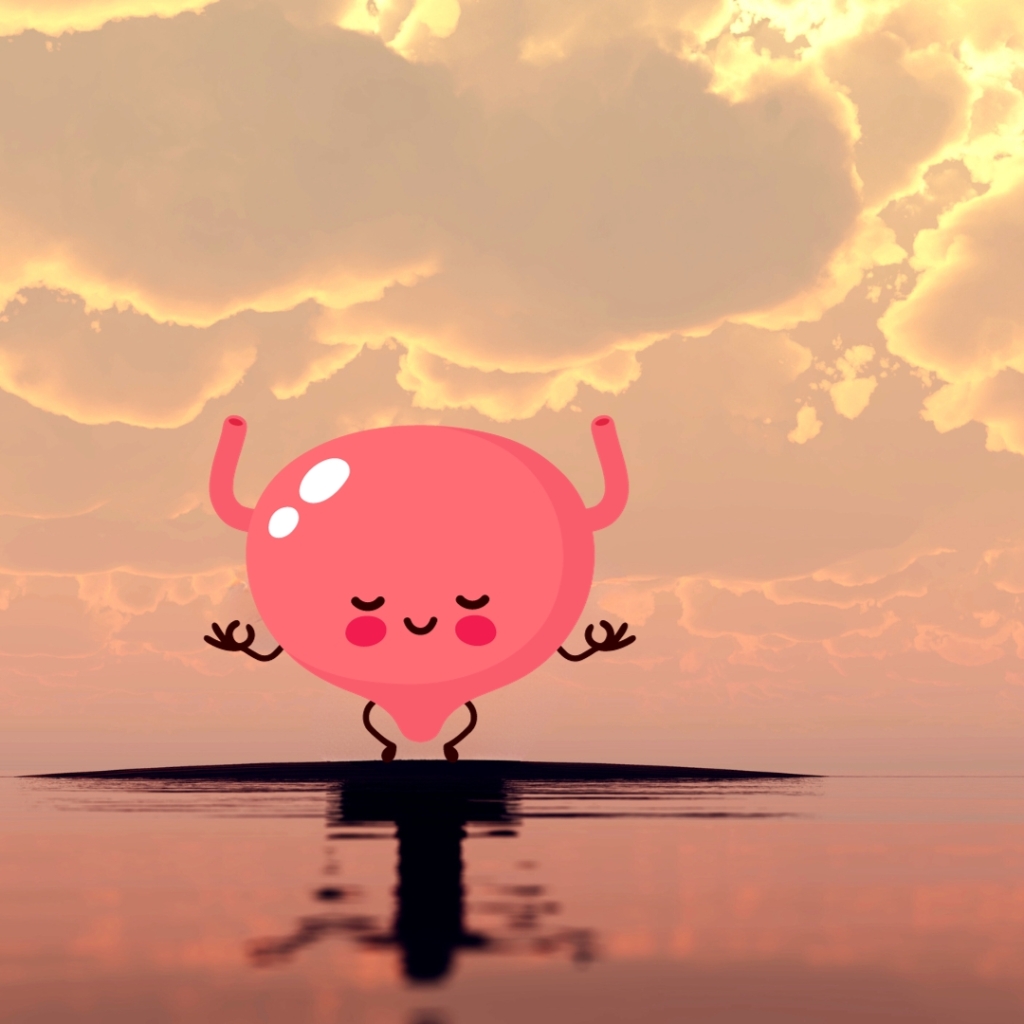
Ever wondered why peeing can sometimes feel like a struggle? Is your toddler pleading with you from her potty chair, despair and confusion on her face, saying “Mommy, I’m pushing but it won’t come out!” It all comes down to the fascinating relationship between your bladder and your pelvic floor muscles. Understanding this connection can lead to happier bathroom experiences and decreased stress on your urinary system and pelvic floor.
Understanding the Bladder-Pelvic Floor Connection
The bladder and the pelvic floor are like two best friends who spend every moment together, talking, bickering, making up, and talking some more. They are in constant communication. Sometimes, the bladder wants to release urine at inappropriate times, like when you’re still one hour away from the next rest area. That’s when the pelvic floor tells your bladder to hold off and—hopefully—keeps the bladder at bay. Let’s dive in to the connection between your bladder and your pelvic floor.
- Muscular Support: The pelvic floor is a group of muscles that form a supportive sling at the bottom of your pelvis. Among its many functions, this muscular structure plays a pivotal role in supporting your bladder, uterus (in women), and rectum. Imagine it as a hammock-like network of muscles, tendons, and ligaments that keeps your pelvic organs in place, preventing them from descending into the lower pelvis. You can learn more about it here.
- Sphincter Control: Within the pelvic floor, there are specialized muscles known as sphincters, which act as gates to control the flow of urine and stool. The urethral sphincter, located around the opening of the urethra (the tube through which urine exits the body), is particularly crucial. When these sphincter muscles are relaxed, urine can flow out of the bladder freely.
- Nerve Communication: When the bladder fills with urine, stretch receptors in the bladder wall send signals to your brain, indicating the need to urinate. In response, the brain sends signals back to the pelvic floor muscles, instructing them to relax and allow the bladder to empty. The bladder is surrounded by its own muscle, called the detrusor. This muscle contracts to squeeze the pee out while your pelvic floor muscles let go. It is controlled by your autonomic nervous system, meaning it is smooth muscle that you cannot contract voluntarily.
Here is a simplified illustration of the cycle our bodies go through to store and release pee. I’ve taken the brain out of the picture to help keep things simple.

The Secret to Wonderful Wees
One fundamental principle will transform your peeing mechanics: don’t force it! Instead of pushing, take a moment to relax. When you let your pelvic floor muscles release, you’re signaling to your bladder that it’s okay to let the urine flow. This seemingly simple act can make a world of difference. While the process involves a complex interplay between your brain and various bodily functions, the basic idea remains: let go to let it flow. The detrusor muscle of the bladder contracts for you, without your conscious or voluntary effort. Your job is to relax the pelvic floor- the muscles you can control.
If you have children who are struggling with peeing, whether due to lack of understanding, developmental differences, or medical procedures like catheterization, teaching them this concept can be a game-changer. You can even use a visual aid like a balloon to help them grasp the idea! See my reel on instagram where I demonstrate this useful visual!
4 Tips for Improved Flow
Here are some practical tips to help your pelvic floor muscles relax and promote effortless urination:
- Elevate Your Feet: Use a stool to raise your feet, ensuring your knees are higher than your hips when you sit on the toilet. This natural posture encourages relaxation. No stool? You can use a stack of books, yoga blocks, or even an overturned bucket or small trashcan.
- Deep Breathing: Practice deep, slow breathing. It calms your body and helps your muscles relax, including the ones around your bladder. Let your belly fully expand as you inhale. Allow your muscles to rest as you exhale.
- Body Support: Find a comfortable position by resting your forearms on your thighs or leaning gently on the back of the toilet. Supporting your body reduces strain.
- Soothing Sounds: Turn on the sink and close your eyes. Listen to the sound of running water; this auditory cue can help your mind and body relax, promoting easier urination.
When to Seek Help
If you’ve tried these techniques, but you or your child still struggles with urination, I encourage you to seek medical advice. Symptoms such as burning or pain with urination, foul odor, a sense of blockage, or blood in the urine require medical attention. Don’t ignore these warning signs, and talk to a physician promptly. You can also reach out to me for guidance. Your bladder health matters, and you deserve to pee happily.
Rhea Physical Therapy is a mobile pelvic health clinic serving women and children in the St. Louis, MO area and beyond. Rhea PT is owned and operated by Dr. Savannah Carlson, PT, DPT, RYT. Dr. Carlson is a pelvic health specialist who is dedicated to helping her clients overcome pelvic floor dysfunction so they can reach their full potential at home, work, and play. She earned her doctor of physical therapy degree at Washington University in St. Louis. The information provided on But First, Pelvic Health is for educational purposes only and should not be used as personalized medical advice.
 But first, Pelvic Health.