
No pelvic health blog would be complete without a discussion about female external anatomy and physiology. If you take anything away from this article, let it be this: Your vulva is normal. Your vulva is unique. Your vulva is beautiful.
Discover the vulva
The external genitals of the typical human female are collectively called the vulva. Put simply, and to clear up any confusion, the vulva is the outside and the vagina is the inside. Research has shown there is endless variation, and no two vulva look exactly the same. 1The main structures are labeled on the diagram below.
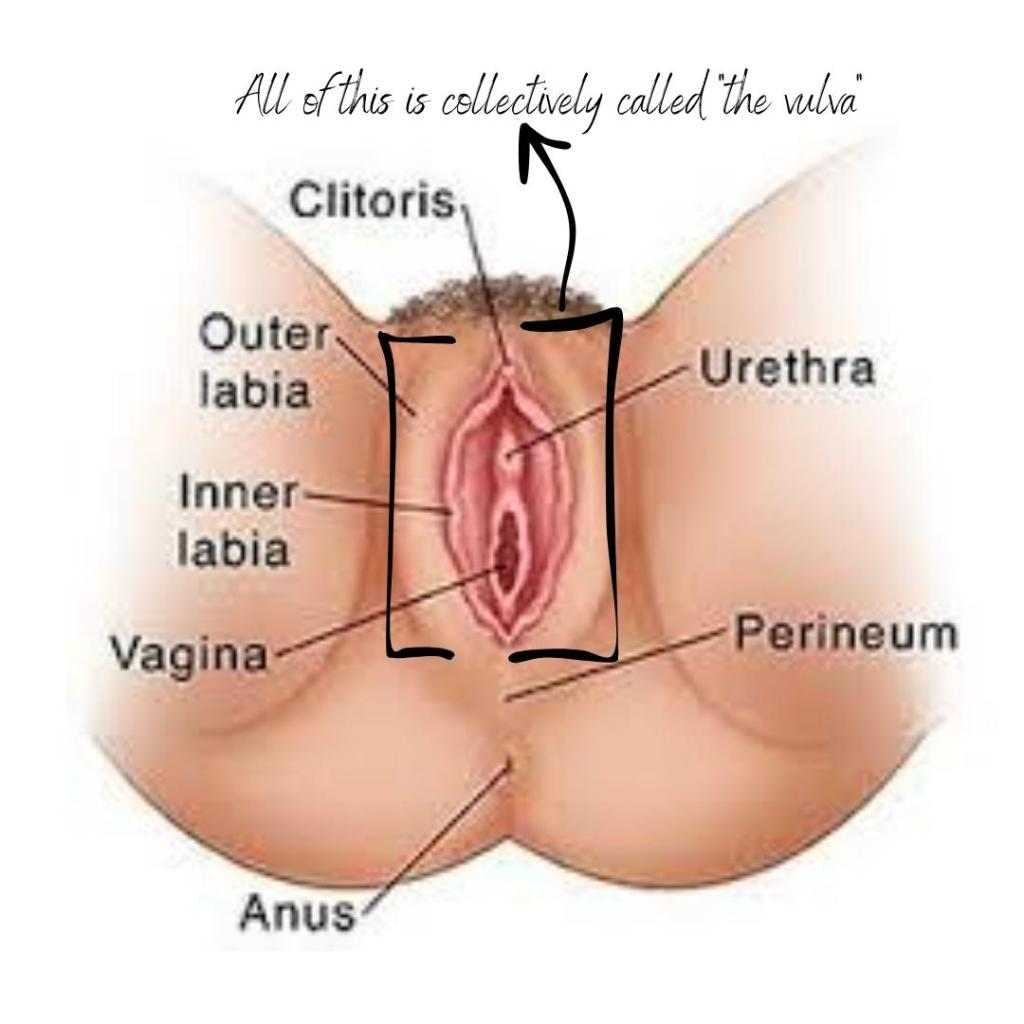
Have you ever looked at your vulva? Can you find your clitoris? Now is the time!
Find a hand mirror or take out your phone. Lie down comfortably with pillows under your head and shoulders. Bend your knees and take a look using your mirror or camera. Try to identify each of the parts below:
- Mons pubis: the dome-like pad at the very top, usually covered with hair
- Labia majora/outer labia: two lip-like structures, one on each side. Larger, usually covered in hair
- Labia minora/inner labia: two smaller lip-like structures inside the labia majora. They are often thinner, less uniform, and sometimes a different color. No hair here.
- Clitoris: small bulb-like structure at the top of the labia minora, usually covered by a sort of hood-like tissue.
- Urethral opening: a very small hole below the clitoris. Might be hard to see. Don’t worry if you can’t find it!
- Vaginal opening: a larger hole below the urethral opening.
What does the vulva do?
The primary purpose of the vulva and all of its parts is sexual function. When a female is aroused, blood rushes to these structures, secretions from surrounding glands increase lubrication, and the clitoris becomes erect. The clitoris is full of nerve endings, with sources listing anywhere from 8,000 to more than 10,000. This little structure is powerful; it is the only structure in the human body designed solely for pleasure.2 In addition to sexual function, the vulva protects the tissues at the vaginal opening and stretches to deliver a baby.
There are three openings in typical female pelvic anatomy: the urethra, the vagina, and the anus. The urethra releases urine. The vagina is the passage in and out of the uterus. The anus releases stool.
The perineum is the space between the vulva and the anus. It is the place where several of the pelvic floor muscles connect. The perineum helps support the vagina and the rectum.
Your vulva is normal
What did you discover when you looked at your vulva? Did it surprise you? How did it make you feel?
Whatever you noticed about your vulva, I can assure you that it is organized perfectly, exactly as it is meant to be. Above all, it is normal. Nothing is wrong with it, and it doesn’t need to match the vulvas you may have seen in porn, locker rooms, or anywhere else. In fact, every vulva is different, and anybody who says otherwise is probably trying to sell you something. To discover more about vulvar diversity, or if you need a little help believing that your vulva is normal and wonderful just the way it is, I recommend visiting these two wonderful websites:
These websites celebrate vulvar diversity, and they are changing the narrative around female anatomy. Yes, please.
Rhea Physical Therapy is a mobile pelvic health clinic serving women and children in the St. Louis, MO area and beyond. Rhea PT is owned and operated by Dr. Savannah Carlson, PT, DPT, RYT. Dr. Carlson is a pelvic health specialist who is dedicated to helping her clients overcome pelvic floor dysfunction so they can reach their full potential at home, work, and play. She earned her doctor of physical therapy degree at Washington University in St. Louis. The information provided on But First, Pelvic Health is for educational purposes only and should not be used as personalized medical advice.
 But first, Pelvic Health.